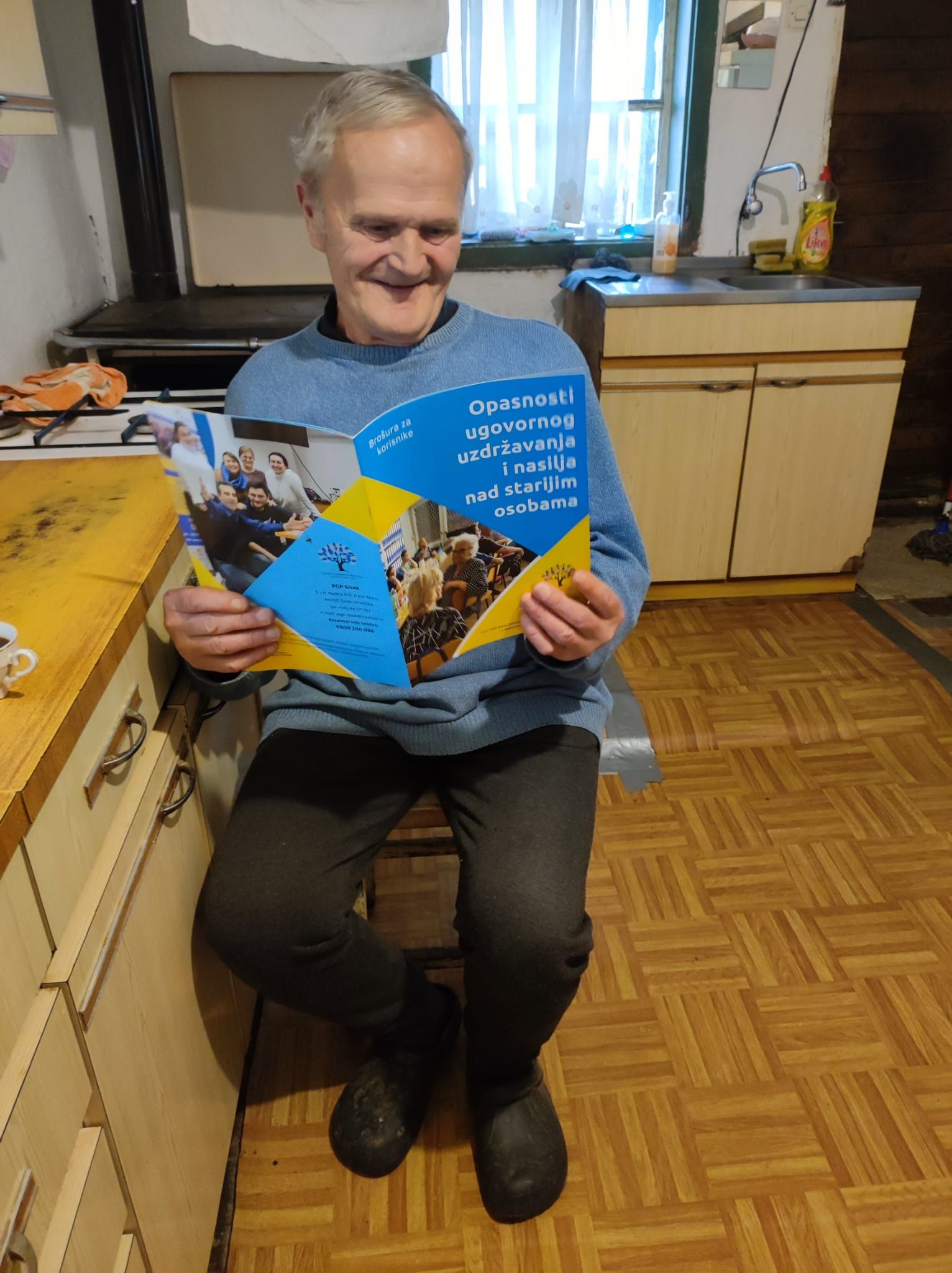
On 29 April 2024, the Ordinance on the Register of Lifelong Support and Support until Death Agreements was adopted and published in the Official Gazette of the Republic of Croatia, No. 56/2024, while the Register became operational on 1 July 2024. Its introduction forms part of a set of changes aimed at better regulating the area of lifelong support and support until death agreements and providing greater protection to persons entering into such agreements.
Under a lifelong support agreement, one person undertakes to provide assistance and care to another person until that person’s death, in return for acquiring certain assets upon the death. In the case of a support until death agreement, the assets may, pursuant to the agreement, be transferred to the person providing maintenance while the person receiving maintenance is still alive. For this very reason, entering into such agreements may have very serious consequences, particularly where an apartment, house or other property is concerned.
The Register of lifelong support and support until death agreements was introduced in order to keep records of such agreements in a single place. It records information on agreements entered into, their amendments, as well as certain information concerning court proceedings conducted in relation to them. This may be particularly important where multiple agreements exist or where a question subsequently arises as to whether an agreement has been amended or terminated, or whether proceedings have been initiated seeking annulment of such agreement or a declaration of its invalidity.
One of the important advantages of the Register is greater transparency. Instead of information being held solely by an individual notary public or court, it is recorded in a more systematic manner in a centralized electronic register. This may help prevent certain problems and facilitate verification of what has occurred with a particular agreement. The Register may be particularly useful in protecting elderly people, who often enter into such agreements because they require assistance and care from another person.
It is important, however, to understand that the Register is not a “protection against everything”. It cannot prevent a person from being deceived, coerced into entering into such agreement, or entering into an agreement without sufficiently understanding its consequences. The Register merely records information concerning agreements and certain proceedings conducted regarding them. If a dispute arises – for example, if a person claims that he/she did not freely consent to the agreement or that the other party is failing to perform obligations, it will still be necessary to seek appropriate legal and judicial protection.
Another important issue is privacy. The Register contains personal data and is therefore not intended to function as a public database in which anyone can freely search for information concerning all agreements. On one hand, this protects citizens’ privacy, on the other hand, it means that access to the information is not always straightforward for anyone wishing to verify whether a particular agreement exists.
It is also positive that amendments to the Civil Procedure Act have introduced rules providing that proceedings concerning the amendment, termination, annulment or declaration of nullity of these agreements are to be treated as urgent. This aims to ensure that disputes are resolved more quickly, which is important where elderly persons and their property are concerned.
The introduction of the Register can therefore be viewed as a step towards greater legal certainty and improved record-keeping of lifelong support and support until death agreements. The results of the Register remain to be seen, because, although it has now been in operation for two years already, we have so far not witnessed any concrete effects. Nevertheless, the Register itself will not resolve all problems. For citizens to receive effective protection, it is equally important that, before signing an agreement, they fully understand what they are signing, what obligations they are undertaking and what will happen to their property. It is particularly important not to equate lifelong support agreements with support until death agreements, as there is a significant difference between the two regarding the point in time at which the transfer of property takes place.
Ultimately, the aim of these changes should be simple: a person entering into such a support agreement should know what they are signing, their consent should be free and genuine, and, in the event of a problem, they should be able to protect their rights quickly and effectively.
The best protection lies not only in the Register, but also in making the decision to pause before signing, ask questions, and understand every consequence of such agreement.
Sisak, 16 September 2026
CRP SISAK



 Loading ...